What Do You Give a Child Who Has Everything?
You're standing in the toy aisle, phone in hand, scrolling through endless wish lists. But everything you see, the child already owns. Or something suspiciously similar is already buried in the playroom. If you've ever felt this quiet panic before a birthday, you're in good company. Today's kids grow up with closets stuffed full of toys, and yet the question keeps nagging: what do you give a child who has everything?
Here's the reassuring part. The gifts children value most often have nothing to do with owning more stuff. In this article I'll share concrete ideas grounded in child development research, so you can choose something that truly sticks. Not in the toy box, but in the memory.
Why more toys aren't the answer
There's a fascinating phenomenon researchers call the "paradox of choice." The more toys a child owns, the harder it becomes to focus on any single one. A 2018 study from the University of Toledo watched toddlers play in a room with four toys versus sixteen. The children with fewer options played longer, more creatively, and far more deeply with each object.
This echoes what Maria Montessori observed a century ago: children thrive on simplicity and meaning, not abundance. When everything is available, each object loses its shine. Today's exciting new toy is tomorrow's forgotten thing under the bed.
For you as a gift-giver, this is genuinely freeing. You don't have to compete in the race of "who gives the biggest present." In fact, the gift that makes a real impact is often smaller, more personal, and cheaper than you'd expect. The secret lies in three directions: experiences, involvement, and meaning.
Give an experience instead of an object
Ask any adult about their favorite childhood memory and you'll rarely hear about a toy. You'll hear about the time Grandad took them fishing, or the trip to the aquarium. Research by psychologist Thomas Gilovich at Cornell University confirms it: people draw more lasting happiness from experiences than from material things. The same holds true for children.
Experience gifts carry an extra bonus. They create time together, and undivided attention might be the scarcest currency in busy family life. A few ideas that work beautifully:
- A day out together. Think a visit to a petting farm, an indoor climbing gym, or a train ride into the city. Turn it into a ritual by letting the child count down on the calendar, because the anticipation is half the joy.
- A class or workshop. A block of swimming lessons, a pottery afternoon, or a kids' cooking club gives not just fun but a new skill and a boost of confidence.
- A season pass with built-in adventure. A membership to a zoo, science center, or children's theater. You're not giving one moment but a whole year of outings.
- A mini-adventure at home. No budget for a big trip? A living-room camping night with flashlights, popcorn, and bedtime stories is every bit as magical to a five-year-old.
One tip: wrap an experience gift into something tangible. Slip a train ticket into a little box or draw a "voucher" the child can redeem. Kids want something to hold and unwrap, even when the real gift is the time that follows.
Gifts that feed imagination and growth
Not every physical gift is unnecessary. The difference lies between toys that are ready-made (one button, one function, quickly abandoned) and toys that grow with the child and spark imagination. Developmental psychologist Jean Piaget stressed how vital open-ended play is for cognitive development: children come to understand the world by building, pretending, and experimenting for themselves.
What works by age
0-2 years: For the littlest ones, sensory experience is everything. Think stackable wooden toys, a soft fabric ball with different textures, or a first touch-and-feel book. Skip the gifts with flashing lights and blaring sounds, which tend to overstimulate rather than engage.
3-5 years: This is the golden age of imagination. Dress-up clothes, a doctor's kit, wooden building blocks, or a personalized story in which the child is the hero all feed the imagination enormously. At this age a sense of self blossoms too, so personal gifts land especially well.
6-8 years: Now children want to be able to do things. A real kid-sized tool set, a science kit with experiments, an art set, or a beginner instrument matches their growing competence and pride.
For inspiration tailored to each stage, take a look at the gift ideas by age, from baby to teen. That way you can match your choice precisely to the developmental phase the child is in.
Choose something personal and meaningful
When a child already has everything, there's one thing no one can duplicate: something made specifically for them. Personal gifts strike a deep chord because they carry a message: "I see you, and you matter." For a child's developing sense of identity, that recognition is worth its weight in gold.
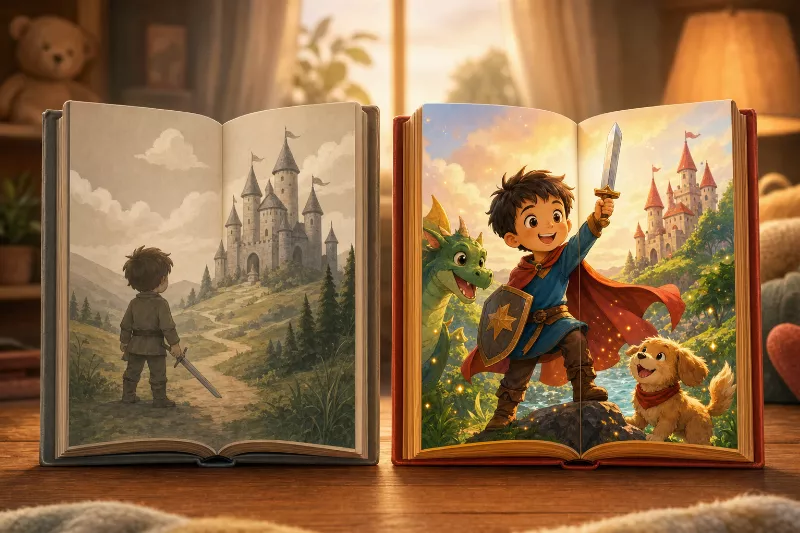
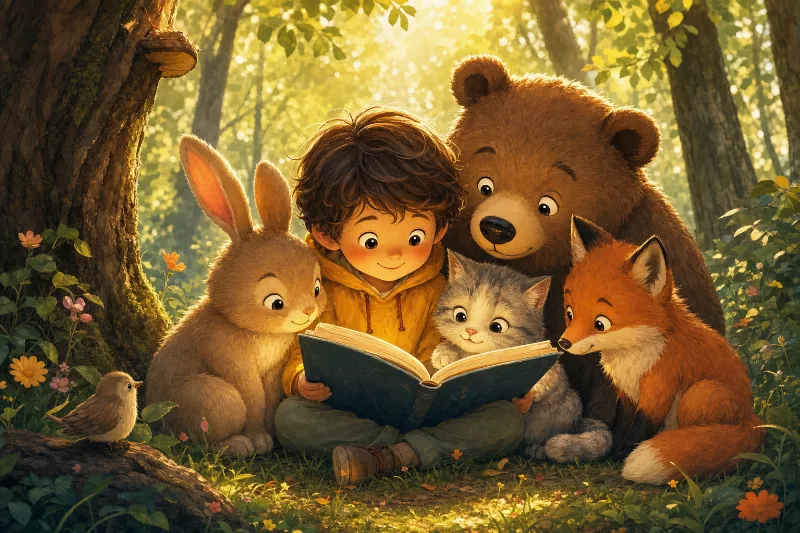
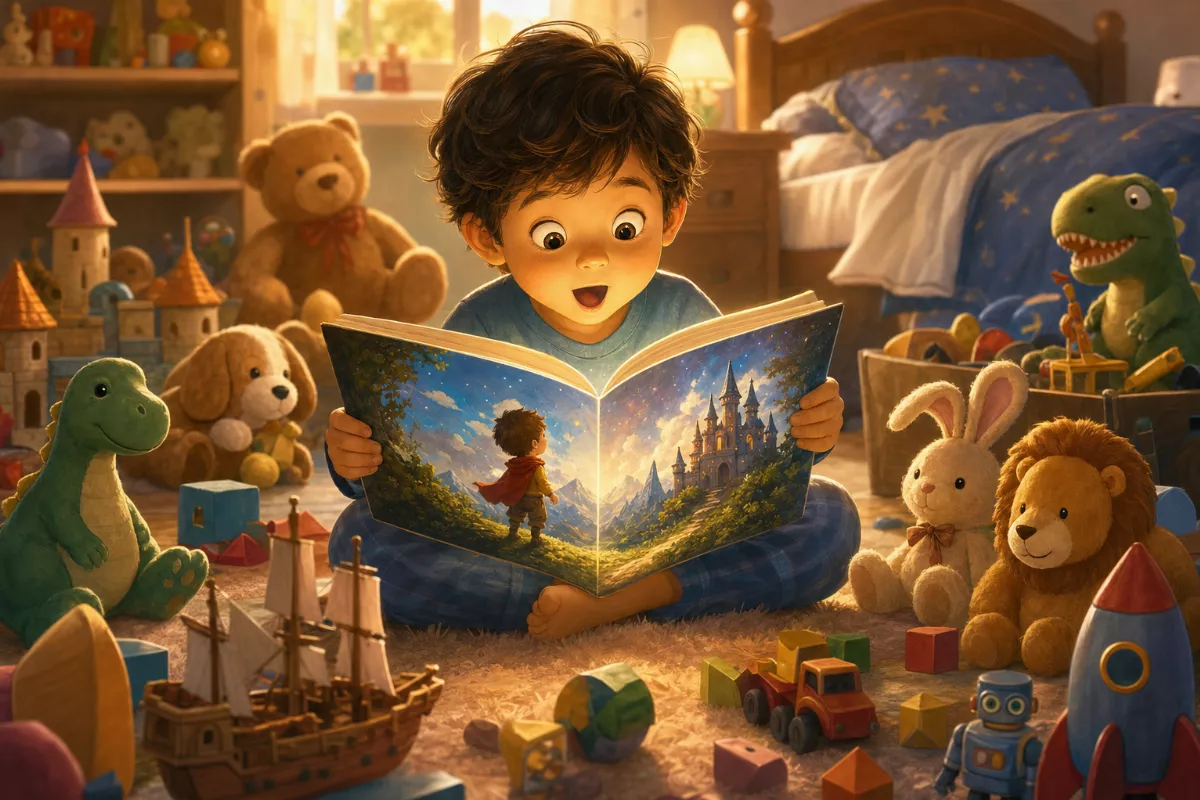
One of the loveliest examples is a personalized children's book in which the child plays the starring role. Instead of reading about some random hero, the child sees their own name on the pages and lives an adventure built around them. Children who recognize themselves in a story listen more attentively and develop a stronger love of reading. You can build a story from scratch or first browse some examples for inspiration.
Other personal gifts that stay with a child:
- A memory book or time capsule. Collect photos, drawings, and a letter the child gets to open ten years from now. A gift that grows in value as the years pass.
- Something handmade. A knitted stuffed animal, a song written just for them, or a small painting. The imperfection is exactly what makes it irreplaceable.
- An engraved keepsake. A wooden name sign for the bedroom door or a growth chart with their name becomes a lasting part of the home.
Gifts that give something back to the world
As children get older, gifts can also pass along values. Research into prosocial behavior shows that kids who learn to share and care early on develop greater empathy and resilience. A gift, then, can double as a gentle lesson in gratitude.
- Symbolically adopt an animal in the child's name through a wildlife charity. The child receives photos and updates and learns to feel connected to something beyond themselves.
- A "growing" gift. Give a tree sapling or a small vegetable planter the child gets to tend. It teaches patience, responsibility, and the quiet magic of watching something grow.
- Do something kind together. Sort through toys to donate, or bake cookies for the neighbors. The experience of giving is surprisingly satisfying for many children.
These gifts also solve the overflowing-closet problem elegantly: you add nothing to the pile, but you hand over something far more lasting.
A practical checklist for choosing the perfect gift
Still on the fence? Run through these questions before you buy. They'll help you move past the reflexive "just one more toy":
- Does this add something the child doesn't already have? Not in a physical sense, but in terms of experience, skill, or feeling.
- Will it grow with them, or be forgotten within a week? Choose gifts with a long shelf life in attention.
- Does it include time or attention? The best gifts create moments together.
- Is it personal? Something suited specifically to this child always beats something generic.
- Does it suit the occasion? A gift for a child becoming a big brother or sister calls for something different than a birthday present, and a milestone like a first communion asks for its own thoughtful touch.
When you can answer a confident "yes" to at least three of these, you're on the right track. For inspiration around specific occasions, browse the overview of gift occasions.
Above all, remember this: a child who "already has everything" never really lacks a thing. What lingers are the moments of wonder, the time someone set aside for them, and the feeling of being truly seen. That's the gift that never goes out of style and never disappears under the bed.
Last updated on
18-07-2026