Personalized Books Now Have More Characters & Teen Adventures
For years, personalized books had a lovely but narrow reputation: a single child's name stitched into a gentle bedtime story about a bunny or a bear. Sweet, yes. But if you've got a house with two, three, or four kids, a teenager who rolls their eyes at anything "babyish," or a child who wants dragons instead of ducklings, you know the old formula only stretched so far. The good news is that personalized storytelling has grown up alongside our kids.
Today's books can feature entire crews of siblings and friends, come in art styles that feel genuinely modern, and offer plotlines with real stakes for older readers. Let's look at what's changed, why it matters for development at every age, and how to choose the right story for the child in front of you.
More characters, fewer left-out kids
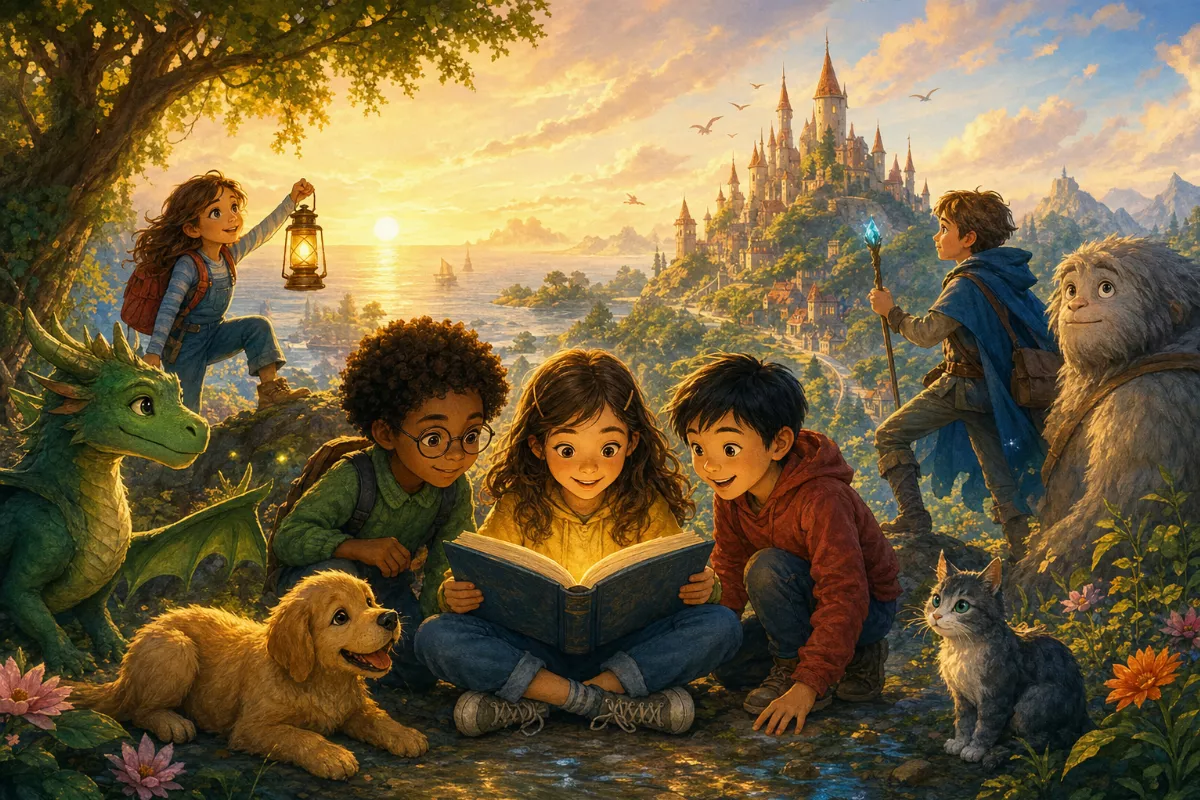
One of the biggest shifts is the ability to include multiple children in the same story. Instead of buying separate books and watching one sibling feel like the star while the other feels like an extra, you can now build a single adventure where two, three, or even four characters share the spotlight. This sounds like a small change, but for family harmony it's enormous.
Developmental psychologists have long pointed out that sibling rivalry often intensifies around perceived fairness. Children keep a surprisingly precise mental ledger of who got what. When both kids appear on the page, fighting the same monster or solving the same puzzle together, the book itself models cooperation rather than competition.
- Blended and step-families: A story that names all the children, regardless of who lives where, quietly says "you all belong in this family." That message lands harder than any lecture.
- Best friends and cousins: Including a beloved friend turns a book into a shared keepsake. Two children can each own a copy of the same adventure they starred in together.
- New siblings: A book where a big kid welcomes a baby character can gently prepare a child for a new arrival. Our gift ideas for a new big brother or sister lean heavily on this exact approach.
Practical tip: when you personalize a multi-character book, take a moment to reflect each child's real traits, hair, skin tone, glasses, curls. Kids notice when a character actually looks like them, and that recognition is a huge part of the magic.
Fresh art styles that don't feel like everything else
The illustration in children's books has quietly undergone a revolution. For a long time, personalized titles all shared the same soft, rounded, pastel look. Charming for toddlers, but forgettable and, frankly, a little boring for anyone older. Now you'll find a much wider palette of styles, and matching the art to the child makes a real difference in how invested they feel.
Matching the look to the reader
- Toddlers (0-2): High-contrast shapes, big friendly faces, and simple backgrounds. Research on infant vision shows babies are drawn to bold outlines and clear contrast long before they process fine detail.
- Preschoolers (3-5): Warm, colorful, expressive illustrations with lots of small details to point at and name. This is prime "what's that?" territory, and busy pages fuel vocabulary building.
- Early readers (6-8): More dynamic scenes with movement, humor, and visual jokes that reward a second look. Comic-influenced panels can bridge the gap toward independent reading.
- Tweens and teens (9+): Sleeker, more sophisticated art, graphic-novel energy, cinematic compositions, and moodier color schemes that respect an older reader's taste.
The lesson from Montessori-inspired design applies here: the environment (and the book) should meet the child where they are, not talk down to them. If you want to see how varied the styles have become, browsing a few example books is the fastest way to get a feel for it.
Real adventures for tweens and teens
Here's the myth worth busting: personalized books are not just for little ones. The single biggest reason older kids abandoned them was content, not the concept. A twelve-year-old doesn't want to be tucked into a story about counting sheep. But a twelve-year-old absolutely wants to be the hero who cracks the code, survives the shipwreck, or leads the rebellion.
Modern personalized adventures for older readers include longer chapter-style narratives, genuine plot tension, and themes that resonate with the tween and teen brain: identity, courage, friendship under pressure, and standing up for what's right. That aligns neatly with what we know about adolescent development, where questions of "who am I?" and "where do I fit?" dominate.
- Quest and fantasy: The reader becomes a chosen protagonist navigating a magical world, making choices that shape the outcome.
- Mystery and detective plots: Puzzles and clues invite older kids to think alongside the story rather than passively receive it.
- Coming-of-age journeys: Stories that mirror real emotional milestones, first big responsibility, moving to a new place, a friendship that changes.
- Milestone editions: A personalized book can mark a rite of passage beautifully, from starting secondary school to a First Holy Communion.
Reluctant teen readers are a special case worth mentioning. When a struggling or unenthusiastic reader sees their own name as the lead character, motivation often jumps. There's a well-documented "self-reference effect" in memory research: we pay more attention to, and remember better, information connected to ourselves. A book literally about them can be the hook that gets a page-turner-averse teen reading again.
Why personalization works so well, at any age
It's tempting to see a personalized book as a cute gimmick, but the psychology underneath is solid. When children encounter themselves in a narrative, several things happen at once. They engage more deeply, they build stronger emotional connections to reading, and they absorb the book's message more readily because it feels aimed directly at them.
Jean Piaget's work reminds us that children construct understanding through active engagement rather than passive absorption. A story where the child is the protagonist is inherently active, they're not watching someone else's adventure, they're in it. That participation is fuel for comprehension and for a genuine love of books.
There are practical benefits too:
- Name recognition and early literacy: For preschoolers, seeing their name repeatedly in print is often the very first word they learn to recognize and read.
- Emotional regulation: A character who shares their name working through fear, frustration, or shyness gives kids a safe rehearsal space for their own feelings.
- Belonging and self-esteem: Representation matters. A book that reflects a child's appearance, family, and experiences sends a quiet but powerful message that their story is worth telling.
If you're curious how other parents have seen these effects play out, the customer reviews are full of specific, relatable moments, the shy kid who asked to read it every night, the sibling squabbles that eased.
How to choose the right book for your child
With so many more options, choosing well matters. Here's a simple framework to match a book to the child rather than defaulting to whatever's on the shelf.
- Start with age and reading level, but don't be a slave to it. A precocious six-year-old may love a longer adventure; a laid-back nine-year-old might still enjoy a shorter, funnier story. Consider the child, not just the birthday.
- Match the theme to their current obsession. Dinosaurs, space, ballet, football, wizardry, whatever they can't stop talking about is your best clue. Our inspiration page is handy when you're stuck.
- Decide who else belongs in the story. Siblings? A best friend? A pet? Multi-character books shine when a child has someone to share the adventure with.
- Pick an art style they'll actually like. Show an older child a couple of options and let them weigh in. Ownership boosts enthusiasm.
- Consider the occasion. A birthday, a new sibling, a first day at school, each calls for a slightly different tone. Browse by age to see ideas tailored to a specific stage.
When you're ready to build one, the process is refreshingly simple: you create your own book by entering the child's details, choosing the story and style, and buying the eBook, so you can see the whole book before you decide on a hardcover. It takes minutes, and the payoff is a keepsake that often outlives every plastic toy in the house.
A book that grows with your child
The most exciting part of all this evolution is continuity. A toddler can start with a bright, simple personalized board book, grow into a preschool adventure bursting with detail, then, years later, become the hero of a teen quest with their name on the spine. The format bends to fit the reader instead of forcing the reader to shrink to fit the format.
That flexibility is exactly what modern families need. More characters mean nobody gets left out. Fresh art styles mean the book feels current, not dated. And real adventures for older kids mean personalized storytelling no longer expires at age seven. Whatever stage your child is at, there's now a version of the story waiting to be told, with them right at the center of it.
Last updated on
15-10-2026