Books for Children Who Don't Like to Read: What Helps

- Why some children push back against reading
- The right book changes everything
- Follow their interests, not yours
- Format matters as much as the story
- Making reading feel natural at home
- An approach that fits your child's age
- Toddlers and preschoolers (2 to 5)
- Beginning readers (6 to 8)
- Older children (9 to 12)
- Handling the competition from screens
- The power of a book where your child is the hero
You settle onto the couch with a book, and your child immediately squirms away. "Can't I just watch something instead?" If that sounds familiar, you're in good company. Plenty of parents feel like they're pushing a boulder uphill with a child who finds reading boring, hard, or simply not worth the effort. Here's the reassuring part: reluctance to read is almost never permanent. Usually there's a specific cause behind it, and once you understand it, you can gently remove the roadblock instead of fighting the same battle every evening.
Why some children push back against reading
Before reaching for solutions, it helps to understand where the resistance is coming from. A child who "hates reading" is rarely being lazy. More often, the reluctance is a signal that something else is going on. Pinpoint the cause and you can choose an approach that fits your child, rather than treating the symptom.
The most common reasons behind reading resistance include:
- Reading takes too much effort. For a child still working hard to decode words, a story isn't a pleasure, it's a chore. Every bit of mental energy goes into sounding out the words, so the actual story slips away. That's a fast track to feeling like a failure.
- The topic doesn't grab them. A child obsessed with sharks who keeps getting handed fairy tales will naturally tune out. Interest is the single strongest engine behind reading motivation.
- Screens are stiff competition. Video games and YouTube deliver instant rewards and constant stimulation. A book asks for patience and imagination, skills that need practice to build.
- Reading feels like homework. When reading is only ever tied to school and assignments, the joy evaporates. Psychologist Edward Deci's research on motivation showed that pressure and obligation actually undermine the intrinsic motivation we're hoping to nurture.
- An underlying reading difficulty. Sometimes dyslexia or another challenge is at play. Persistent, stubborn resistance is worth a quiet conversation with your child's teacher.
The right book changes everything
A child who insists they don't like reading has usually just not found the right book yet. Think of it like food: a kid who gags at broccoli hasn't sworn off all vegetables forever. It comes down to the match between the child and the book.
Follow their interests, not yours
Notice what your child talks about endlessly or plays with for hours: soccer, space, dogs, dinosaurs, Minecraft, cooking. Then hunt down books on exactly that. A soccer-mad kid is far more likely to open a story about a goalkeeper than a classic bedtime tale. When a child sees themselves reflected in the main character, engagement climbs even higher. That's why personalized stories where your child is the hero work so well for hesitant readers: the book is literally about them.
Format matters as much as the story
Not every child lights up at a thick book crammed with text. For reluctant readers, these formats often lower the barrier:
- Comics and graphic novels. The blend of pictures and words makes the page far less intimidating. Research confirms that comics build genuine reading comprehension, despite the old myth that they "don't count" as real reading.
- Books with short chapters. A win after five minutes motivates far more than an endless chapter. "Just one more" suddenly feels doable.
- Search-and-find and activity books. Look-and-find pages, joke books, and lift-the-flap titles turn reading into something interactive instead of passive.
- Picture-rich read-alouds. For younger kids, a vivid illustration holds attention while the words quietly sink in.
Making reading feel natural at home
Reading motivation doesn't grow in a vacuum. It grows in a home where books are normal, visible, and part of the fun. You don't need to be a devoted bookworm to create that. Small habits do most of the heavy lifting.
- Model it yourself. Kids copy what they see. If you regularly curl up with a novel or a magazine, reading becomes ordinary. Chat about what you're reading over dinner as if you're sharing a bit of gossip.
- Keep books within reach. Put a basket of books by the sofa, one on the nightstand, and one in the car. What's within arm's reach gets picked up far more often than what's hidden behind cabinet doors.
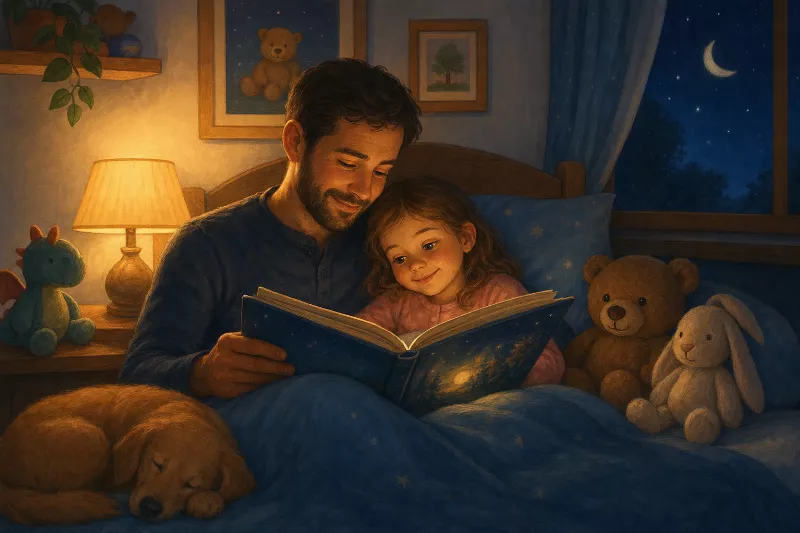
- Build a consistent reading moment. Ten minutes of reading before bed creates calm and connection. The ritual becomes something to look forward to, not a task to check off.
- Let your child choose. Autonomy fuels motivation. Take them to the library and let them pick their own books, even if you'd have chosen something completely different. There are no wrong choices here.
- Take the pressure off. Skip the quiz questions like "So what happened on that page?" Reading is allowed to be pure enjoyment with no pop test at the end.
For more ways to turn reading into a lasting habit, browse our other articles on reading and child development.
An approach that fits your child's age
What works for a toddler falls flat with a preteen. Tune your approach to your child's developmental stage. Jean Piaget described how children think and understand the world differently at each stage, and their reading needs shift right along with them.
Toddlers and preschoolers (2 to 5)
At this age it's not about reading independently, it's about building positive associations. Reach for sturdy board books with big pictures and repeating phrases. Let your child point at words, mimic sounds, and finish sentences. Reading on your lap ties books to warmth and safety, a foundation that lasts for years. Start with five to ten page books and slowly work up to longer stories. Our age-by-age pages offer suggestions for every stage.
Beginning readers (6 to 8)
Now your child is learning to read alone, and this is the make-or-break window where joy or dread takes root. Choose books slightly below their reading level so the words flow easily and confidence grows. Alternate solo reading with shared reading: you read a page, they read a page. Celebrate every small win and resist correcting every single mistake. Fluency and fun come first, accuracy follows.
Older children (9 to 12)
With older kids, themes can get edgier, funnier, or more thrilling. Series work brilliantly: if book one lands, they'll want the next automatically. Give room for personal taste, even if that means comics, nonfiction, or silly humor. At this age reading competes hard with screens, so screen-light pockets of the day make a real difference.
Handling the competition from screens
Screens aren't the enemy, but they demand little effort and deliver a lot of stimulation. Against that, a book can feel dull fast. You don't need to declare war on tablets, but you can keep the balance healthy.
- Create screen-free zones and times. Make the dinner table and the bedroom screen-free spots. The last half hour before bed is perfect for a book, and it helps kids fall asleep more easily than blue light does.
- Use screen interests as a bridge. Does your child love a certain game, movie, or show? There's often a book set in the same world or featuring the same characters. That's how you connect the familiar to reading.
- Put audiobooks to work. Listening to a story builds vocabulary and story comprehension. Have your child follow along in the physical book while the audio plays, a proven way to build fluency.
- Make reading cozy. A reading tent with cushions, a flashlight under the covers, or snuggling together on the couch makes a book far more tempting than sitting stiffly at a desk.
The power of a book where your child is the hero
There's a reason children who otherwise want nothing to do with books become captivated by a story about themselves. Kids are naturally self-focused, and recognition is a powerful motivator. When a child spots their own name on the page and finds themselves cast as the hero of the adventure, reading shifts from obligation to thrilling discovery.
A personalized book works on several levels at once. It boosts engagement, strengthens self-image, and turns reading into a positive experience your child wants to repeat. For a kid who's used to giving up, that first success can be the very thing that opens the door to reading more. Curious what that looks like? Take a peek at our examples of personalized books or create a book where your child stars. Other parents share how it went for their families in our customer reviews.
Above all, remember this: reading reluctance is not a dead end. With patience, the right books, and a home where reading feels fun, nearly every child eventually discovers the pleasure of a good story.
Last updated on
18-07-2026
Table of Contents
- Why some children push back against reading
- The right book changes everything
- Follow their interests, not yours
- Format matters as much as the story
- Making reading feel natural at home
- An approach that fits your child's age
- Toddlers and preschoolers (2 to 5)
- Beginning readers (6 to 8)
- Older children (9 to 12)
- Handling the competition from screens
- The power of a book where your child is the hero